Understanding the principles of craft beer and food pairing can elevate your dining experience.
Complementary and contrasting pairings offer different ways to enhance flavors.
Regional breweries like Nonesuch River Brewing provide unique insights into local pairings.
Table of Contents
Principles of Craft Beer and Food Pairing
Complementary Pairings
Contrasting Pairings
Regional Insights: Nonesuch River Brewing
Practical Tips for Successful Pairings
Beer Styles and Pairing Suggestions
Creating a Beer Tasting Experience
Seasonal Craft Beer Pairings
Conclusion
Craft beer has evolved into a versatile companion to a wide array of dishes, offering a rich tapestry of flavors that can enhance and complement the culinary experience. Unlike traditional wine pairings, craft beer provides a more accessible and equally sophisticated alternative for food enthusiasts. For instance, aMaine brewery like Nonesuch River Brewing, located in Scarborough and Poland, Maine, exemplifies this versatility by crafting beers that reflect the local terroir, making them ideal for pairing with regional cuisine.
Principles of Craft Beer and Food Pairing
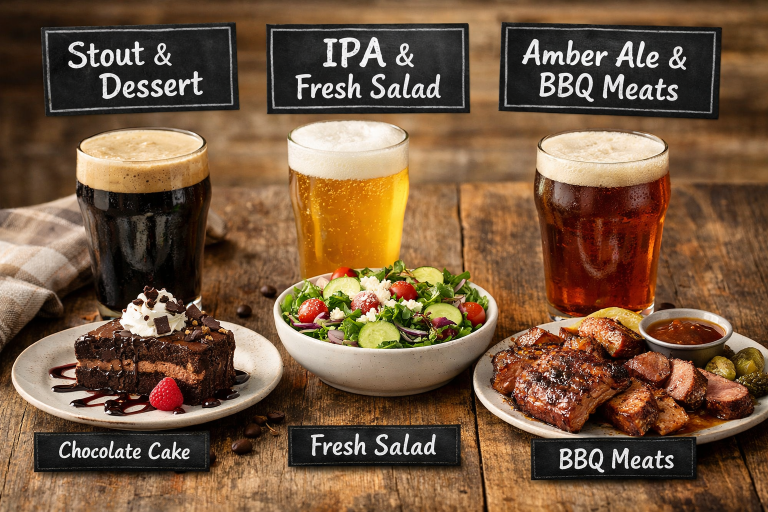
Pairing craft beer with food involves balancing and enhancing flavors through complementary or contrasting elements. Complementary pairings match beer flavors with similar or harmonizing food flavors. For example, a malty amber ale can complement the caramelization of roasted meats or barbecue dishes. Contrasting pairings juxtapose flavors to create balance, such as pairing a hoppy IPA with spicy foods to offset heat with bitterness. Mouthfeel, carbonation, and alcohol content also influence pairings; beers with higher carbonation can cleanse the palate, while those with increased alcohol soften rich, fatty dishes.
Complementary Pairings
Complementary pairings involve matching similar flavor profiles to enhance the overall taste experience. For instance:
Stout and Chocolate Desserts: The rich, roasted flavors of a stout align perfectly with the sweetness of chocolate, creating a harmonious blend.
Wheat Beer and Light Salads: The citrus notes in wheat beers can elevate the freshness of a garden salad.
Amber Ale and Caramelized Dishes: Beers with notes of caramel work well with roasted vegetables and caramelized onions, strengthening nutty, sweet flavors.
Contrasting Pairings
Contrasting pairings aim to balance opposing flavors for a more dynamic taste experience. Examples include:
IPA and Spicy Foods: The bitterness of an IPA can temper the heat of spicy dishes, providing a refreshing counterpoint.
Sour Ales and Rich, Creamy Cheeses: The tartness of a sour ale cuts through the richness of creamy cheeses, cleansing the palate.
Pilsner and Fried Food: The crispness of pilsners offsets the oiliness of fried items like fish and chips, refreshing the palate between bites.
Porter and Salted Snacks: The chocolate and coffee undertones in a porter set off the briny flavors of salted nuts or pretzels.
Regional Insights: Nonesuch River Brewing
Exploring local breweries can offer unique pairing opportunities. Nonesuch River Brewing, with locations in Scarborough and Poland, Maine, is a prime example. As Scarborough’s first and only brewery, Nonesuch River Brewing combines well-crafted, approachable beers with the abundant bounty of Maine’s local and natural resources to create a seasonally inspired menu in a lively, warm, and inviting atmosphere. Their offerings pair excellently with regional seafood dishes, showcasing the harmony between local flavors and brews. Try their crisp lagers with fresh lobster rolls or a farmhouse ale with oysters to enjoy Maine’s coastal cuisine.
Practical Tips for Successful Pairings
Start with Familiar Flavors: Begin by pairing beers and foods you already enjoy separately to understand how their flavors interact.
Consider Intensity: Match the intensity of the beer with the dish to ensure neither overpowers the other.
Experiment: Don’t be afraid to try unconventional pairings; sometimes, unexpected combinations yield delightful results.
Mind the Glassware: Use appropriate glassware to enhance beer aroma and taste, accentuating your overall dining experience.
Take Notes: Keep a journal of your favorite pairings and any surprising successes or failures to refine your palate.
Beer Styles and Pairing Suggestions
Every beer style presents a unique spectrum of flavor, mouthfeel, and food-pairing possibilities. Here are a few popular craft beer styles and their ideal matches:
Pale Ale: Balanced and versatile, pairs well with burgers, grilled chicken, or pizza.
Belgian Tripel: Complex, strong, and lightly sweet; excellent with seafood pasta, mild curries, or goat cheese.
Barrel-Aged Stout: Rich in vanilla and oak, pairs beautifully with blue cheeses and dark chocolate cakes.
Kölsch: Light-bodied with mild fruit and hop notes, complements delicate dishes like ceviche or herbed chicken.
Double IPA: Assertive bitterness and bold aromas, great with spicy Thai dishes or strong, funky cheeses.
Creating a Beer Tasting Experience
Hosting a craft beer pairing dinner or a simple tasting night is a fun and educational way to explore flavor dynamics. Start with lighter styles and gradually proceed to stronger, more robust beers. Provide palate cleansers, like plain crackers or water, between courses. Encourage guests to describe tastes and aromas, discuss their favorite pairings, and rate combinations. Involving local breweries, such as Nonesuch River Brewing, by featuring their seasonal releases can add a sense of place and discovery to your event.
Seasonal Craft Beer Pairings
As the seasons shift, so do the optimal beer and food pairings. In the summer, lighter and refreshing brews such as pilsners, wheats, and fruit sours pair beautifully with grilled fish, salads, and citrusy desserts. Fall is perfect for amber ales, Oktoberfest lagers, and pumpkin beers, which complement roasted vegetables, root crops, and hearty stews. Winter welcomes robust porters, spiced ales, and imperial stouts, ideally matched with braised meats, dark bread, and dense chocolate desserts. Spring encourages the use of saison and farmhouse ales with fresh greens, young cheeses, and early seasonal produce. Tapping into these cycles with beers from local breweries ensures you’re not only eating and drinking well, but also celebrating the region’s best.
Conclusion
Mastering the art and science of craft beer pairingcan transform your dining experiences, offering new dimensions of flavor and enjoyment. By understanding the principles of complementary and contrasting pairings and exploring local breweries like Nonesuch River Brewing, you can elevate your culinary adventures to new heights. Embrace experimentation, trust your palate, and remember that every great pairing begins with curiosity and the willingness to try something new. Whether you’re dining out in Maine or hosting a pairing dinner at home, craft beer opens a world of delicious possibilities.